Overview
In Urbana School District #116, culture isn’t a side initiative; it’s the foundation for everything that follows. Located in Central Illinois alongside the University of Illinois Urbana-Champaign, the district serves approximately 4,300 students across early childhood, five elementary schools, a sixth-grade center, middle and high school programming, adult education, and an alternative school. In recent years, the community has evolved dramatically, with shifting enrollment patterns and a growing number of students experiencing economic hardship. Yet the district’s commitment has remained steady: create the conditions where every learner can thrive.
District Snapshot
11
K-12
Schools
74%
Economically
Disadvantaged
83%
Graduation
Rate
Located in Central Illinois alongside the University of Illinois Urbana-Champaign, the district serves approximately 4,300 students across 11 schools.
District Snapshot
11
K-12
Schools
74%
Economically
Disadvantaged
83%
Graduation
Rate
Located in Central Illinois alongside the University of Illinois Urbana-Champaign, the district serves approximately 4,300 students across 11 schools.
That commitment became even more urgent as Urbana entered year one of a new five-year strategic plan, grounded in a mission “to create a supportive community to equip and nurture all learners to achieve success.” The district’s updated message says it plainly: “Urbana is stronger together,” and the district is leading students into the future.
For Superintendent Dr. Jennifer Ivory-Tatum, that “stronger together” vision has to show up in daily experiences, not just planning documents. “We have rolled out a lot of initiatives,” Ivory-Tatum shared, naming new ELA and math curricula, plus added staff supports. But the work she sees as essential sits “at the top of that mountain”: creating a learning community where students and adults build the mindsets and life skills that strengthen belonging, integrity, and pride.
The District Priority: Aligning Student Success to a Portrait of a Graduate
In the same season that Urbana launched its strategic plan, district leaders, staff, families, and community members also developed a Portrait of a Graduate to clarify the skills and dispositions students should carry from PreK through graduation. What mattered most to the team was ensuring those expectations reflected the whole learner. “We made sure that two of those areas are … competencies,” Dr. Ivory-Tatum explained, emphasizing that the district is committed to graduating students who are socially aware and able to manage emotions and behaviors. She described mindset-based learning as “the finishing touch” that helped the district complete that picture.
A Community-Driven Search, Built on Voice & Trust
For Mrs. Dionne Webster, Director of Family Engagement & Student Supports, the path forward had to reflect Urbana’s identity: a district that prides itself on community, not only within schools, but across the city itself. When the district began its curriculum search in 2023, they started with a committee intentionally designed for broad input, including educators, families, and community members. Surveys helped ensure participation was accessible, down to details like meeting times, and the committee set a clear structure: five meetings across the year with defined goals and decision points.
Because Urbana serves multilingual learners, the team also looked for resources available in multiple languages, including Spanish, and explored options that could meet districtwide needs. The committee narrowed the field to three programs to pilot, then gathered educator feedback through structured check-ins and surveys. By spring 2025, two finalists remained. The district hosted a community meeting at the middle school where families, students, and community members could learn about the options, with interpretation support for Spanish-speaking families and a video recap for those unable to attend. The final survey results confirmed the choice: 7 Mindsets was selected for district implementation.
7 Mindsets helped us complete the full picture of our Portrait of a Graduate, supporting students from pre-K through graduation as they become socially aware, manage emotions and behaviors, and lead stronger into the future.
Dr. Jennifer Ivory-Tatum
Superintendent
Urbana School District #116
Implementation with Integrity: Training Everyone, Not Just Teachers
Urbana’s leaders understand that an implementation’s success depends on clarity, preparation, and shared ownership. Dr. Ivory-Tatum described the district’s approach to new initiatives as commitments, grounded in integrity and fidelity. The district scheduled multiple training opportunities early, gave staff dates well in advance, and provided stipends for summer participation. The result: strong attendance across three 7 Mindsets training sessions held in mid-June, plus an additional session before school began for staff who couldn’t attend earlier.
Just as important, the invitation extended beyond classroom educators. “We didn’t just open this up … to teachers,” Ivory-Tatum said. Administrators participated, and the district made it clear that mindset-based learning would be a shared language across the community. “We wanted it to be a districtwide initiative … because we want to speak the language.”
As the year progressed, ongoing 7 Mindsets support remained essential, especially for staff transitioning from prior materials and adapting to a more robust digital platform. Quarterly virtual check-ins with the district’s 7 Mindsets Customer Success Manager (CSM) helped staff troubleshoot, build confidence, and stay aligned to the pacing and purpose of implementation.
Making It Visible: Blending Initiatives, Supporting Staff & Engaging Students
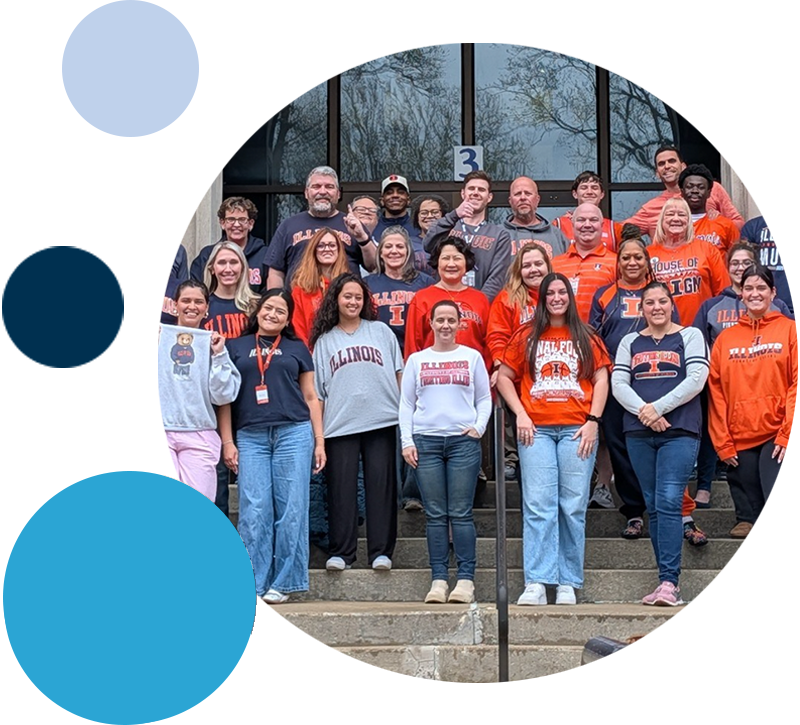
One of Urbana’s most strategic decisions was refusing to treat mindset-based learning as “one more thing.” Instead, district leaders blended initiatives by aligning the mindsets with the Portrait of a Graduate, then supporting staff with concrete tools: posters, translated materials, monthly charts, and incentives that made the learning visible from classroom walls to family communications. The district also shared month-to-month focus areas with families so the language at school could carry into conversations at home.
And because Urbana already had strong culture systems in place, the team looked for ways to streamline, not replace, what was working. For example, they connected positive referrals to the mindset focus so recognition practices reinforced the common language. Elementary schools used paper referrals that students could take home, while secondary levels used digital formats to make it easy to share successes with students’ families.
The Moment That Set the Tone: Opening Day for Everyone
If there was a defining moment in year one, it might be Urbana’s opening day, a districtwide gathering that Dr. Ivory-Tatum calls her favorite day of the year. It’s a full-community event, bringing together teachers, support staff, secretaries, and even bus drivers, all in one space. With everyone present, the district used opening day to introduce the mindsets in a way that felt personal, practical, and inclusive.
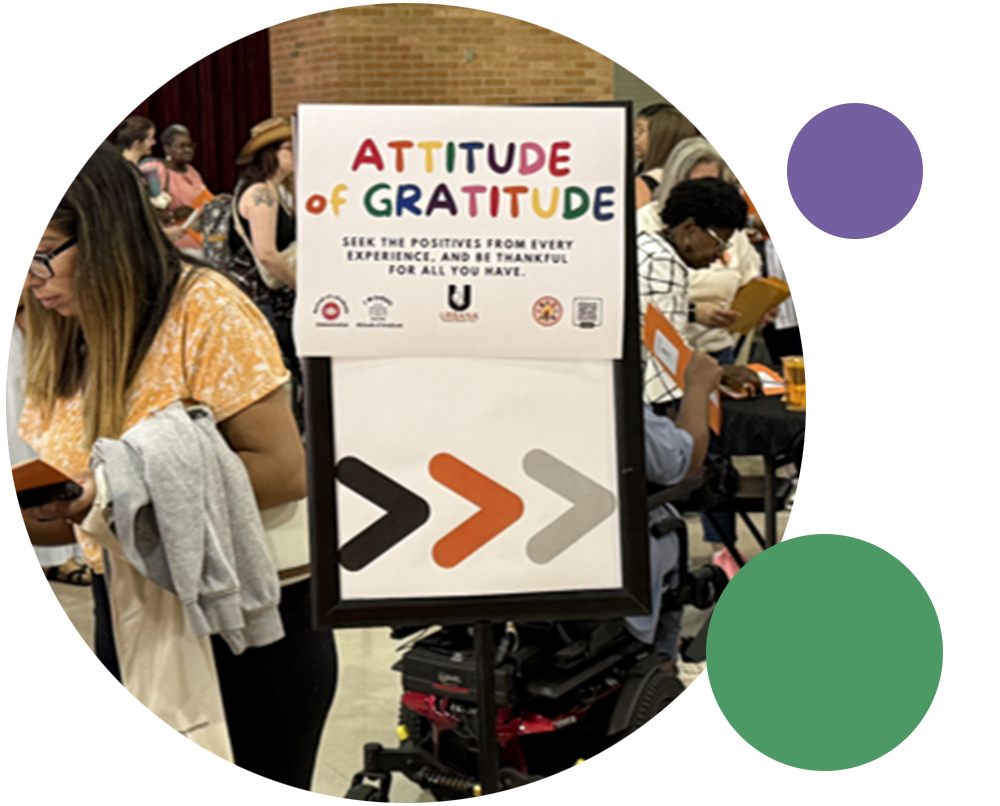
Rather than relying on slogans, they built interactive stations to help adults experience the 7 Mindsets firsthand. At the “Everything is Possible” station, staff posted dreams on sticky notes, creating a display that remained up for weeks. At another favorite station, “We Are Connected,” staff sat across from colleagues they didn’t usually speak with, using conversation starters to build relationships across roles and grade levels.
Other stations invited staff to make commitments, reflect on legacy, share gratitude through postcards delivered to mailboxes on the first day of school, and contribute to a “The Time is Now” word cloud that leaders highlighted as the year began. These experiences reinforced the district’s belief that culture work starts with adults, and that every role belongs in the transformation.
Early Signals of Impact: Ownership, Engagement & Real-Life Application
By spring of year one, the district was seeing the culture shift in meaningful ways, reflected in engagement and ownership. Mrs. Webster used platform data to spotlight implementation champions, identifying 16 “power users” who were on pace and providing feedback, then recognizing them publicly through certificates and shout-outs.
Urbana also built community momentum through a dedicated week of districtwide focus. During SEL week (March 2–6), Dr. Ivory-Tatum kicked things off with a message to staff, followed by daily mindset messages, challenges, and incentives designed to help both adults and students apply the concepts in real life. Mrs. Webster noted how the initiative helped people see the mindsets as “practical” and easy to “streamline into every process.”
Some of the most powerful feedback came directly from classrooms. During staff reflections, one teacher response stood out to Mrs. Webster: the program helped each student “become a better person and [learn] how to handle things,” especially for children who may otherwise react to stress in harmful ways because they “just don’t know” how to navigate the situation yet. For Urbana, that statement captured the purpose of the work.
5 Key Takeaways
- Culture came first, not “one more initiative.” Urbana treated culture as the foundation for everything else, tying the work to their strategic plan and daily experiences—not just a plan on paper.
- They anchored implementation to district priorities (Portrait of a Graduate and CHAMPS). District leaders aligned mindset-based learning to whole-learner competencies (like managing emotions and behaviors), describing it as the “finishing touch” to complete their Portrait of a Graduate, as well as to CHAMPS, their proactive classroom management framework.
- The selection process built trust through broad community voice. A structured committee (educators, families, community members), multilingual access (including Spanish), pilots, surveys, and a community meeting created buy-in before 7 Mindsets’ rollout.
- Adults-first, districtwide training drove shared ownership. Urbana trained everyone (not just teachers) on 7 Mindsets, offered multiple training dates with stipends, and reinforced that the goal was a shared language across roles and schools.
- They made the work visible and sustained momentum with systems. From blended initiatives (recognition tied to the monthly mindset) to family communication, “power user” recognition, and a districtwide themed week, they built structures that kept the 7 Mindsets language alive beyond launch.
What’s Next: Sustaining the Language & Expanding the Reach
Urbana’s leaders view year one not as a finish line, but as a foundation. They’ve centered implementation around shared language, adult modeling, and systems that make culture visible across schools and community touchpoints. Dr. Ivory-Tatum described how she reinforces the work through regular superintendent updates that highlight the monthly focus and share resources directly with staff, demonstrating that mindset-based learning “works for me” too, and that leaders must model what they want to see.
Urbana School District #116’s story shows what’s possible when districts lead with community voice, align culture work to district priorities, and treat implementation as a shared promise, not a one-time rollout. With the systems and momentum established in year one, the school district is positioned to deepen impact year after year, strengthening belonging, building resilience, and leading students into the future, together.
5 Key Takeaways
- Culture came first, not “one more initiative.” Urbana treated culture as the foundation for everything else, tying the work to their strategic plan and daily experiences—not just a plan on paper.
- They anchored implementation to district priorities (Portrait of a Graduate and CHAMPS). District leaders aligned mindset-based learning to whole-learner competencies (like managing emotions and behaviors), describing it as the “finishing touch” to complete their Portrait of a Graduate, as well as to CHAMPS, their proactive classroom management framework.
- The selection process built trust through broad community voice. A structured committee (educators, families, community members), multilingual access (including Spanish), pilots, surveys, and a community meeting created buy-in before 7 Mindsets’ rollout.
- Adults-first, districtwide training drove shared ownership. Urbana trained everyone (not just teachers) on 7 Mindsets, offered multiple training dates with stipends, and reinforced that the goal was a shared language across roles and schools.
- They made the work visible and sustained momentum with systems. From blended initiatives (recognition tied to the monthly mindset) to family communication, “power user” recognition, and a districtwide themed week, they built structures that kept the 7 Mindsets language alive beyond launch.
Want to Learn More?
Request a demo or more information. Submit the form or give us a call at 678-878-3144. Our knowledgeable 7 Mindsets experts are ready to help!
Want to Learn More?
Request a demo or more information. Submit the form or give us a call at 678-878-3144. Our knowledgeable 7 Mindsets experts are ready to help!